

RELIGIOUS EDUCATION
Why is RE important in the 21st Century ?
"Because it's about people and the world. And if you're not interested in people and the world, you're really missing out! " Y5 child
" I admire the diversity that the school provides, helping everyone learn about every religion from a neutral perspective – helping children see similarities and differences across all religions." parent
" I like the range of topics & religions shared. It's brought some interesting discussions to our dinner table!" parent
As a Church of England School, St Peter’s follows the national resource Understanding Christianity together with The Surrey Agreed syllabus for RE. Christian values are at the heart of everything we teach at St Peter’s and in their weekly RE lessons, pupils will explore the deeper meanings and relevance of scripture, both for the people at the time and for today's world. Pupils enjoy the opportunity to ask questions and explore the development and teachings of the Christian faith. They learn that Christianity (as is the case with all religions) has a broad spectrum and that cultural practice and location (both at home and globally) influence the way that people interpret The Bible and Christian narrative. Christianity is studied as a living and diverse global faith, focused on the Gospel teachings. Our units on Christianity progress through the Big Christian Story, beginning with God's Creation and ending with The Kingdom of God. As pupils develop their knowledge and skills, they learn to make links across Christianity and across different major religions and worldviews.
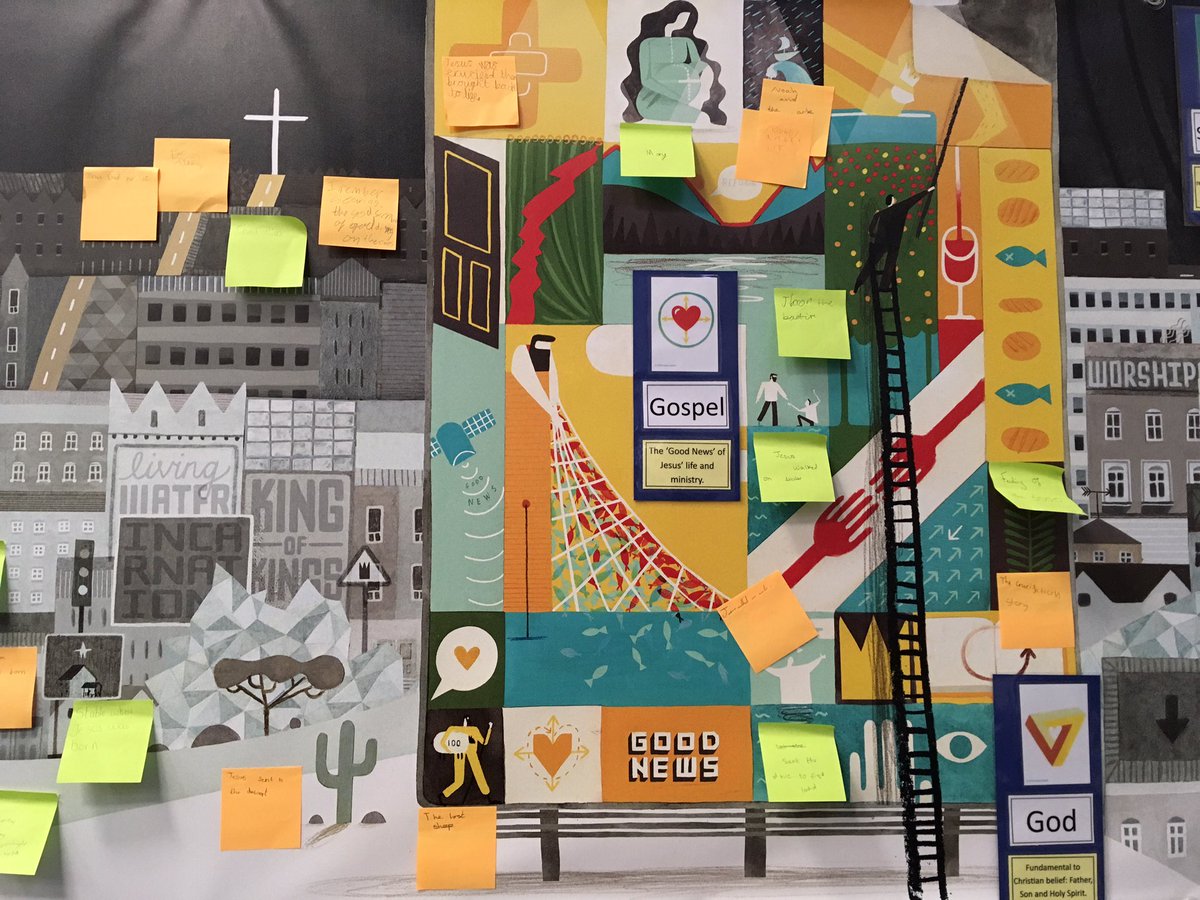
A section of the Big Christian Story frieze on display in our reception area and all classrooms.
How is RE taught?
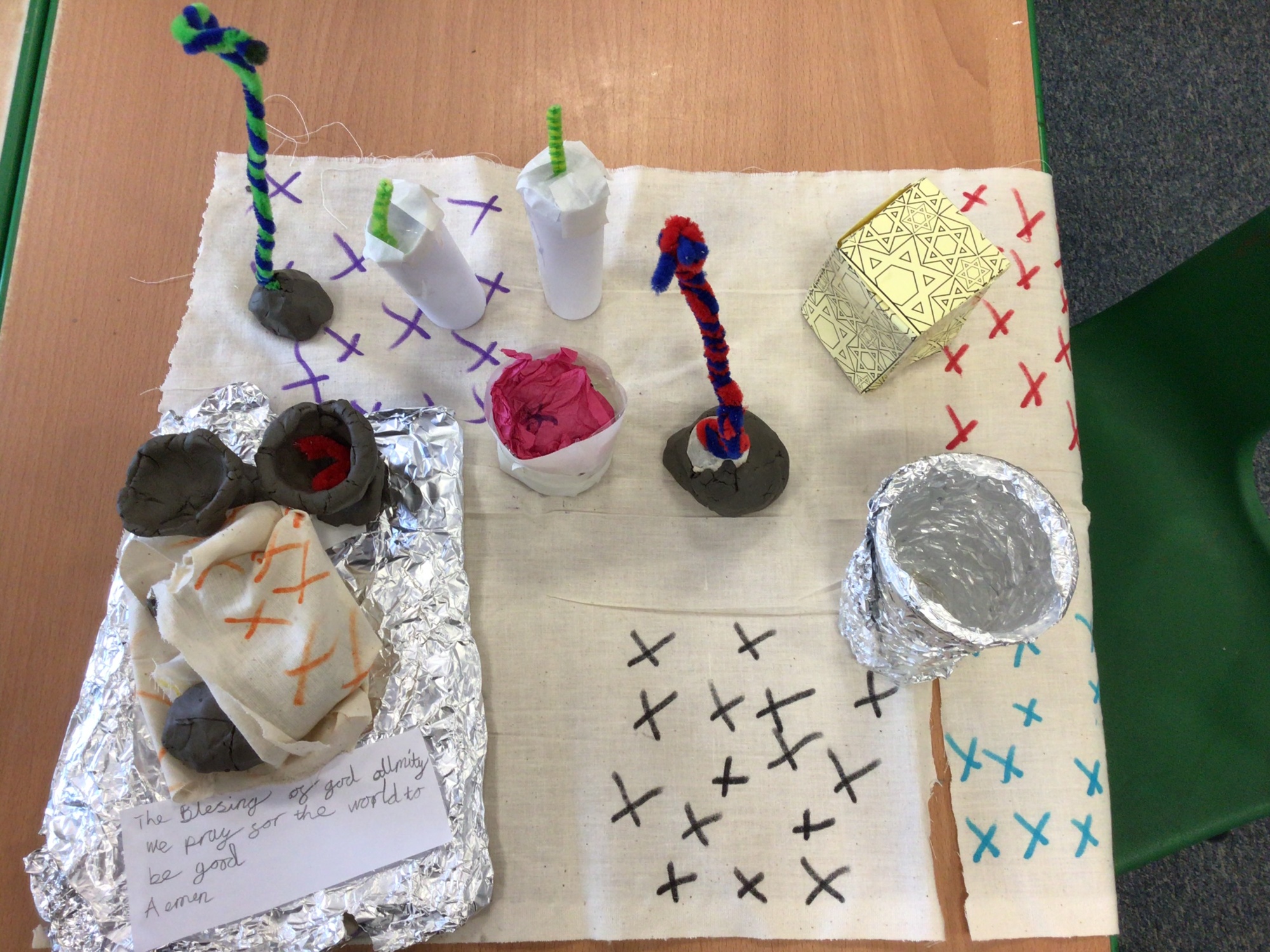
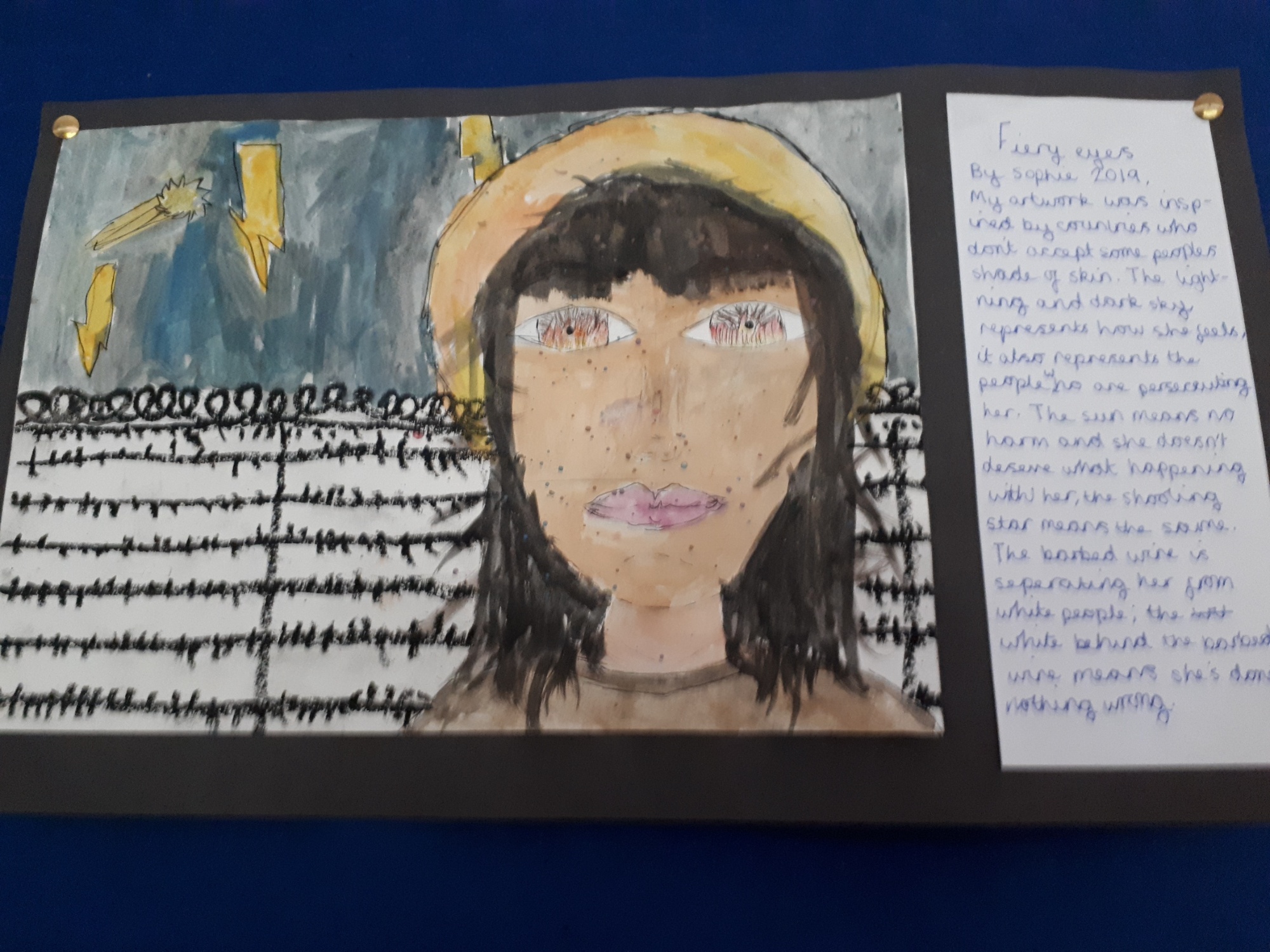
RE is taught as a rigorous, academic subject and has the status of a core subject. In RE lessons children learn to ask the 'big questions' and understand that adults don't always have the answers. RE is not taught with the assumption that everyone is coming from a Christian starting point - pupils are encouraged to ask questions and challenge. It is through these discussions that they develop their own views and learn to listen to others whose opinions may differ radically from their own. The curriculum is designed and delivered to be fully inclusive with a lot of group learning. It also offers many creative opportunities for art, drama and discussion. A child who struggles in more formal areas of the curriculum, may demonstrate a deep understanding and go on to achieve high levels in RE. Pupils' attainment and progress is tracked regularly and planning is adapted to suit learners' needs.
As well as links across other subjects, at St Peter's our curriculum has been crafted to ensure that the school's values (Courage/Inclusiveness/Active Citizen) and ethos are embedded in discussion. Other 'big world issues' which are important to our school community are also included in the learning: climate crisis, poverty, hunger, justice and our shared environment. It is through discussion and reflection in RE lessons, that pupils are encouraged to reflect and empathise with others and try to understand their life circumstances and beliefs. While learning about different faith communities, pupils are able to ponder the meaning of 'community and belonging' and how this sits in their own lives.
Major Religions and World Views
Pupils today grow up in a multi-faith society and many will have little or no experience of formal religion in their homes. As such, we believe that it is important to teach children to appreciate different religions; the core beliefs, the rituals and celebrations. It is through learning about others' lives that they come to engage with diversity and possibly challenge any stereotypical thinking that they may have encountered.
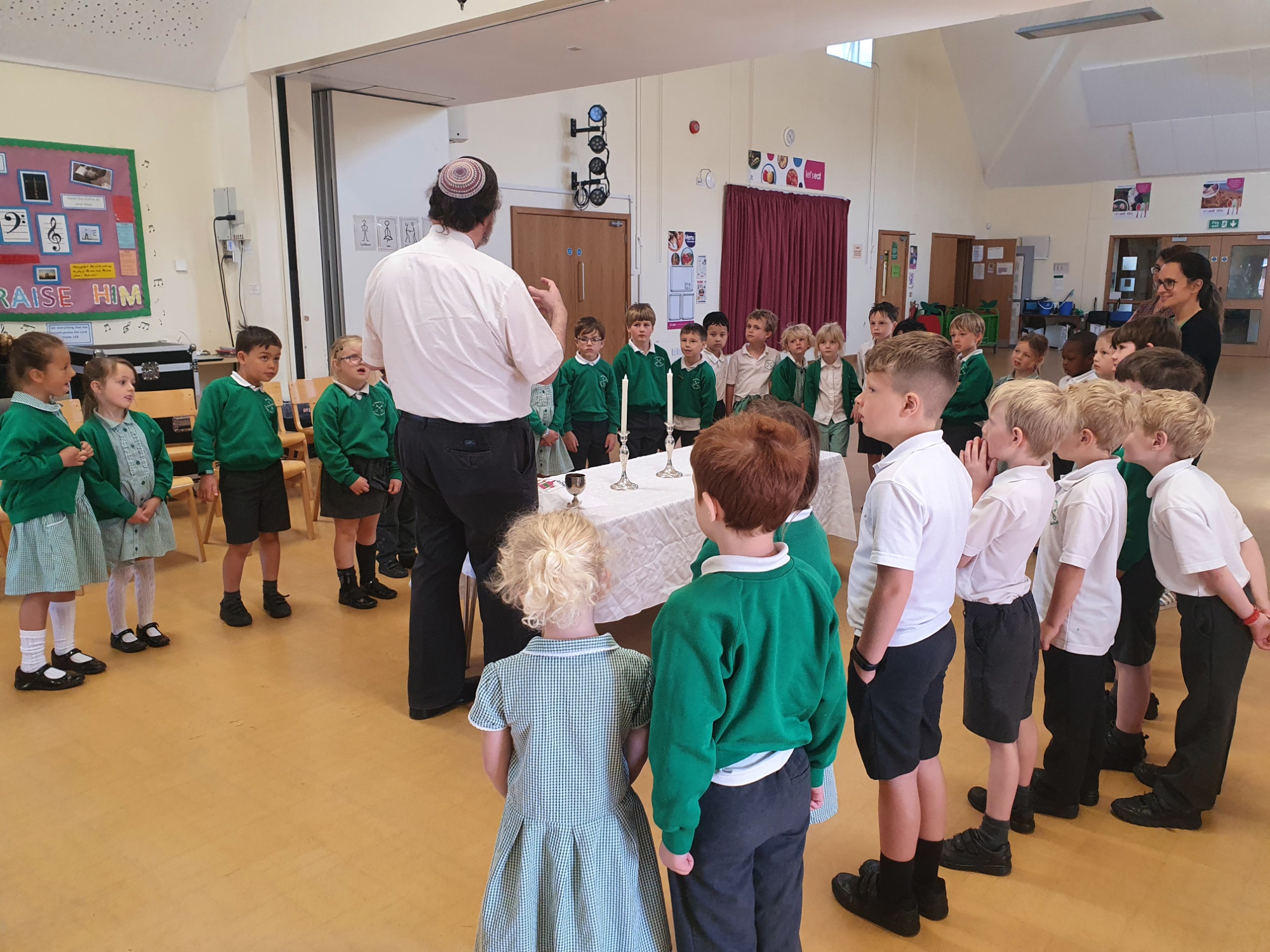
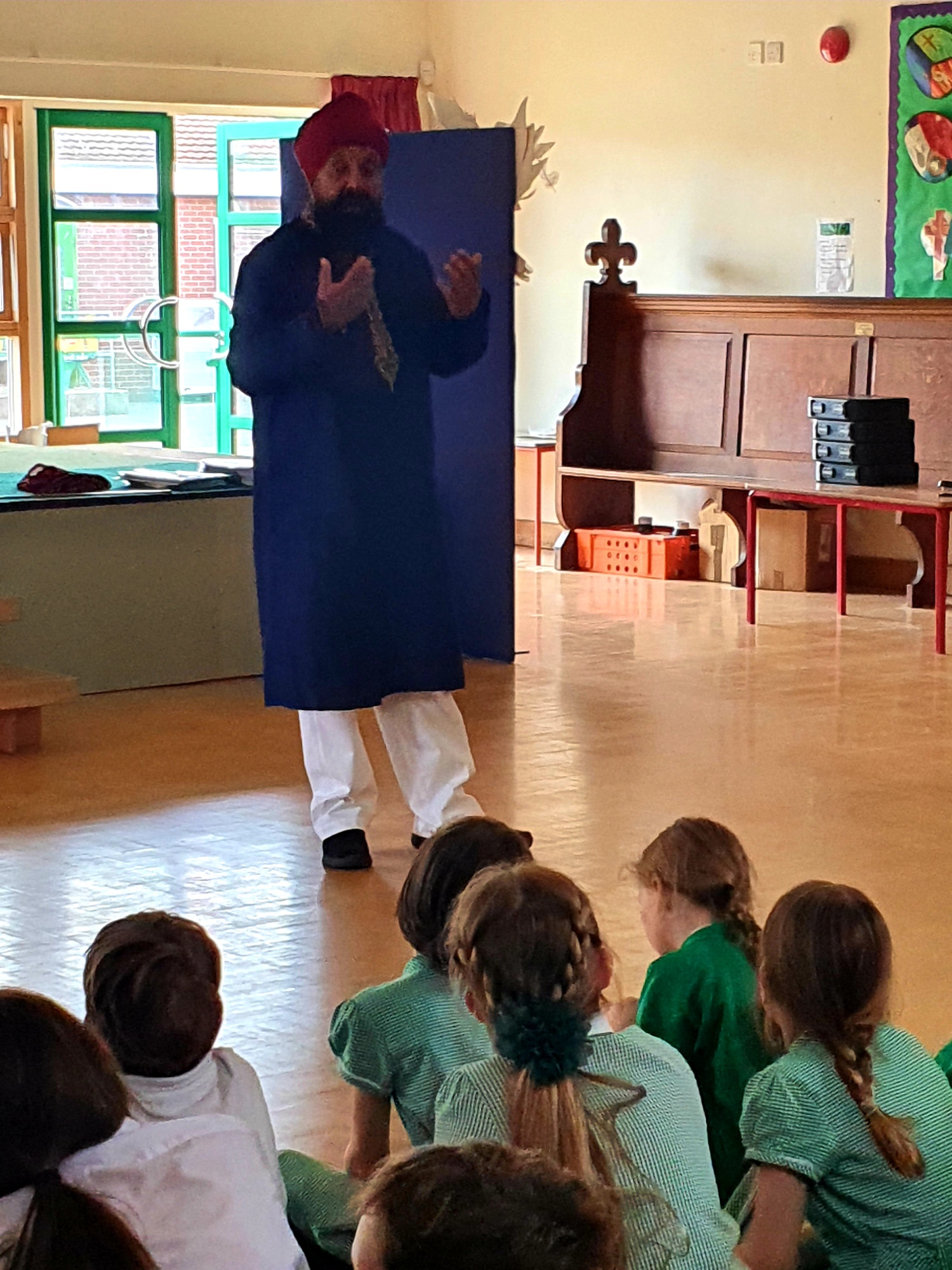
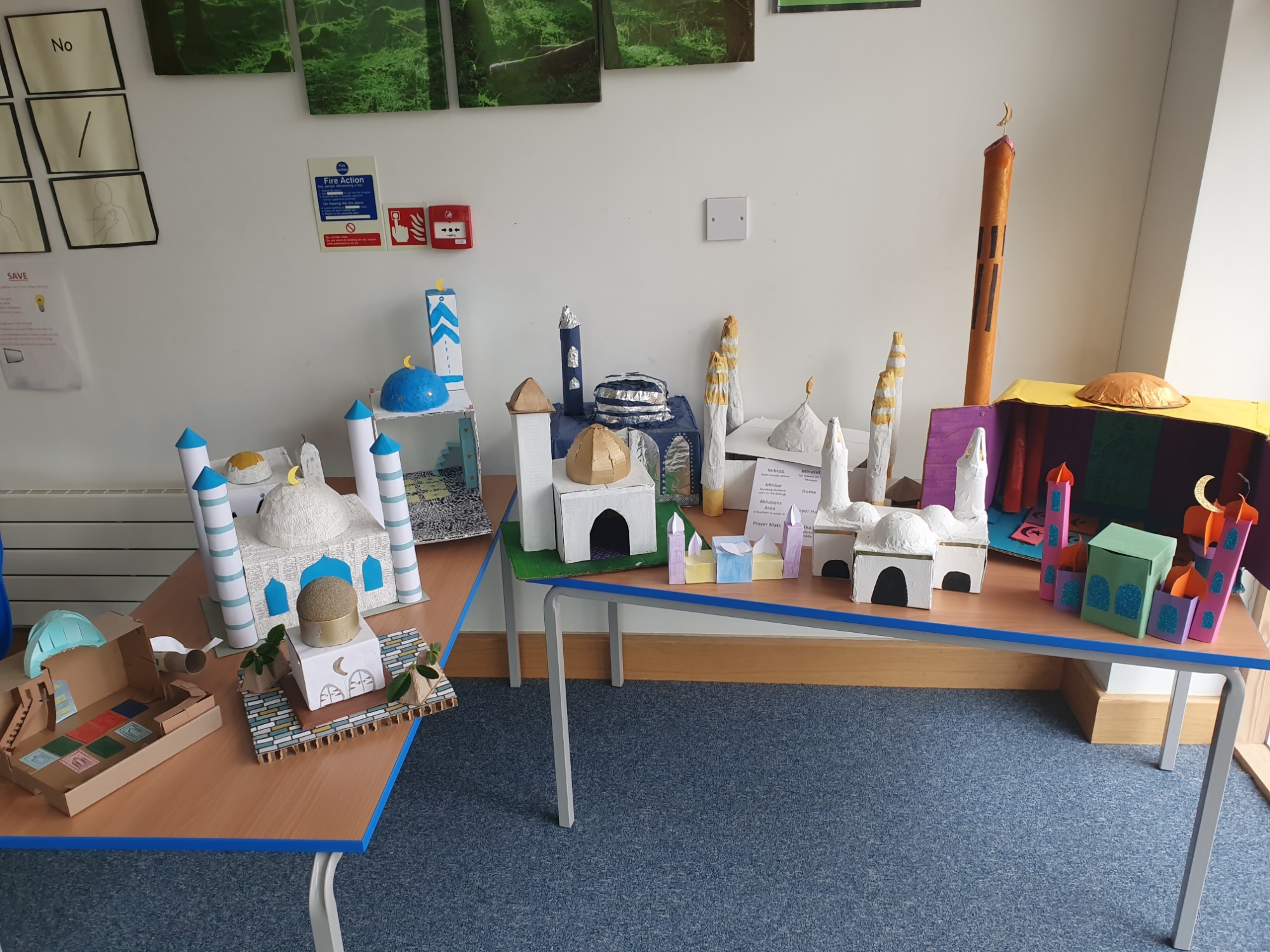
During their time at St Peter's, all pupils will have explored the beliefs and practices of: Islam, Judaism, Hinduism, Sikhism and Buddhism. We have an established programme of visitors from different faiths so that pupils can ask questions and learn from members of the local and wider community. Visits to a mosque, a gurdwara and a virtual synagogue tour are also established. Pupils have the time and space to explore their own thoughts, listen to others, ask questions and develop spiritually. We are well resourced with artefacts from major faiths and welcome visitors who can answer questions, talk about their faith and put the learning into context.
Parents are welcome to see the curriculum if they have questions.
Visitors from the Jewish, Sikh and Muslim faiths
What impact does RE have on pupils going forward?
We believe that a child should leave St Peter's knowing the origins, teachings and principles of Christianity. As they mature and form their own opinions, they will have the knowledge to be able to participate in discussions on topics around religion and moral benchmarks in society. Their learning should also help them to make informed decisions about their own life choices and develop a positive curiosity around diversity and the world that we all share.
A basic understanding of religions can give a person cultural advantages as they recognise many commonly used phrases which originate in the Bible or visit an art gallery to see how many world renowned artists have focused their work on famous stories from scripture. Pupils see the relevance of RE and enjoy the variety of ways that they can access the learning. As such, pupil feedback is always very positive. As one child replied to the question: "What could we do better in RE? - We could do more!"
Parents will sometimes remember dreary RE lessons from their own childhood and wonder why it is relevant today. We would urge you to watch the short clip below: Nobody Stands Nowhere: It's a couple of minutes long and may challenge you to consider why religion and World Views are an important aspect of a modern and challenging curriculum. 'World Views' is a term which is used to refer to a person's way of understanding, experiencing and responding to the world.
A recent survey to parents (2026) showed overwhelming support and positivity towards what their child is learning in RE (see feedback on tab below).